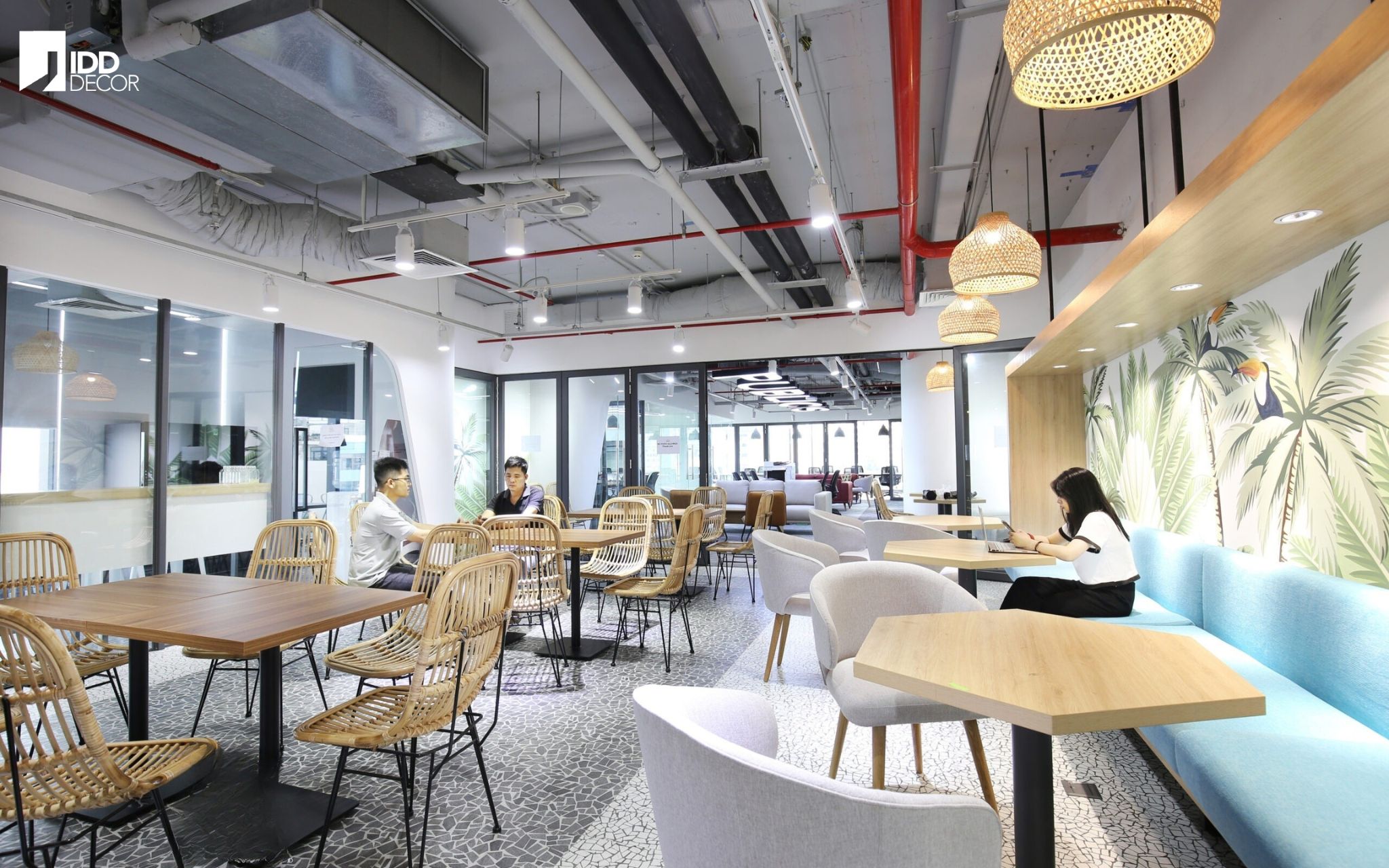
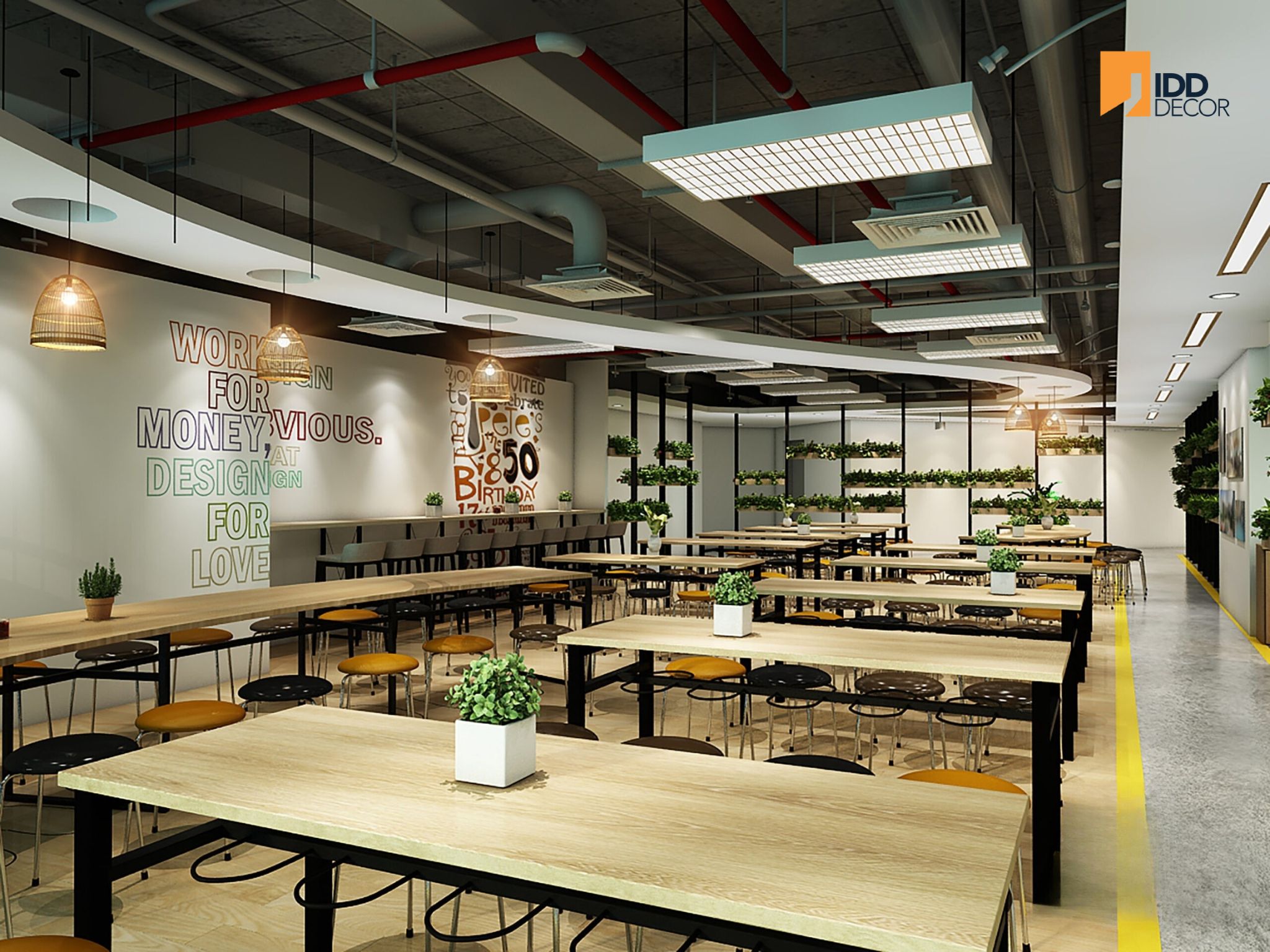
In organizations operating under a multi-shift model—especially manufacturing corporations, operation centers, logistics companies, or businesses with thousands of employees—a pantry is no longer just a mid-shift break area. Today, pantry interior design plays an essential role in employee well-being strategies, reflects corporate culture, and directly impacts health, mindset, and workplace performance.
With extensive experience designing offices for multi-industry clients, IDD Decor delivers professional pantry solutions optimized for 24/7 working environments.
In multi-shift operations, employees often face disrupted biological rhythms, lack of sleep, prolonged stress, and inconsistent energy levels compared to regular daytime work. Therefore, a standard pantry must go beyond a simple snack corner—it becomes a restorative space that supports relaxation, mental balance, and connection among employees who may hardly see each other due to shift differences.
A pantry acts as an “energy recharge station,” where every employee can pause work, unwind, recover, and return in a better state. A well-designed pantry significantly improves staff morale, reduces errors, boosts productivity, and alleviates burnout in high-pressure environments.
In 24/7 operations, internal culture often becomes fragmented by shift groups. This creates challenges in building a unified identity, maintaining communication, and nurturing team cohesion. Therefore, the pantry becomes a cultural touchpoint that connects every shift.
A pantry designed with consistent brand identity conveys company values naturally and sustainably. When employees from morning, afternoon, and night shifts share the same break space, they feel connected to a unified cultural environment and organizational direction.
For this reason, many large enterprises consider the pantry an “invisible communication channel” that is extremely effective.
Pantry spaces for multi-shift operations have design requirements that differ significantly from standard pantries. Continuous usage, high frequency, and fluctuating physical and mental needs require highly strategic planning.
 |
1. Durable Interior Materials for Intensive UseEverything—from tabletops, chair frames, armrests to small hardware like hinges and drawer slides—must use durable, impact-resistant, easy-to-clean materials capable of withstanding heavy use. Example: |
|
|
|
||
2. Lighting Design Supporting Biological BalanceNight-shift staff often experience fatigue, drowsiness, and reduced focus. Example: |
|
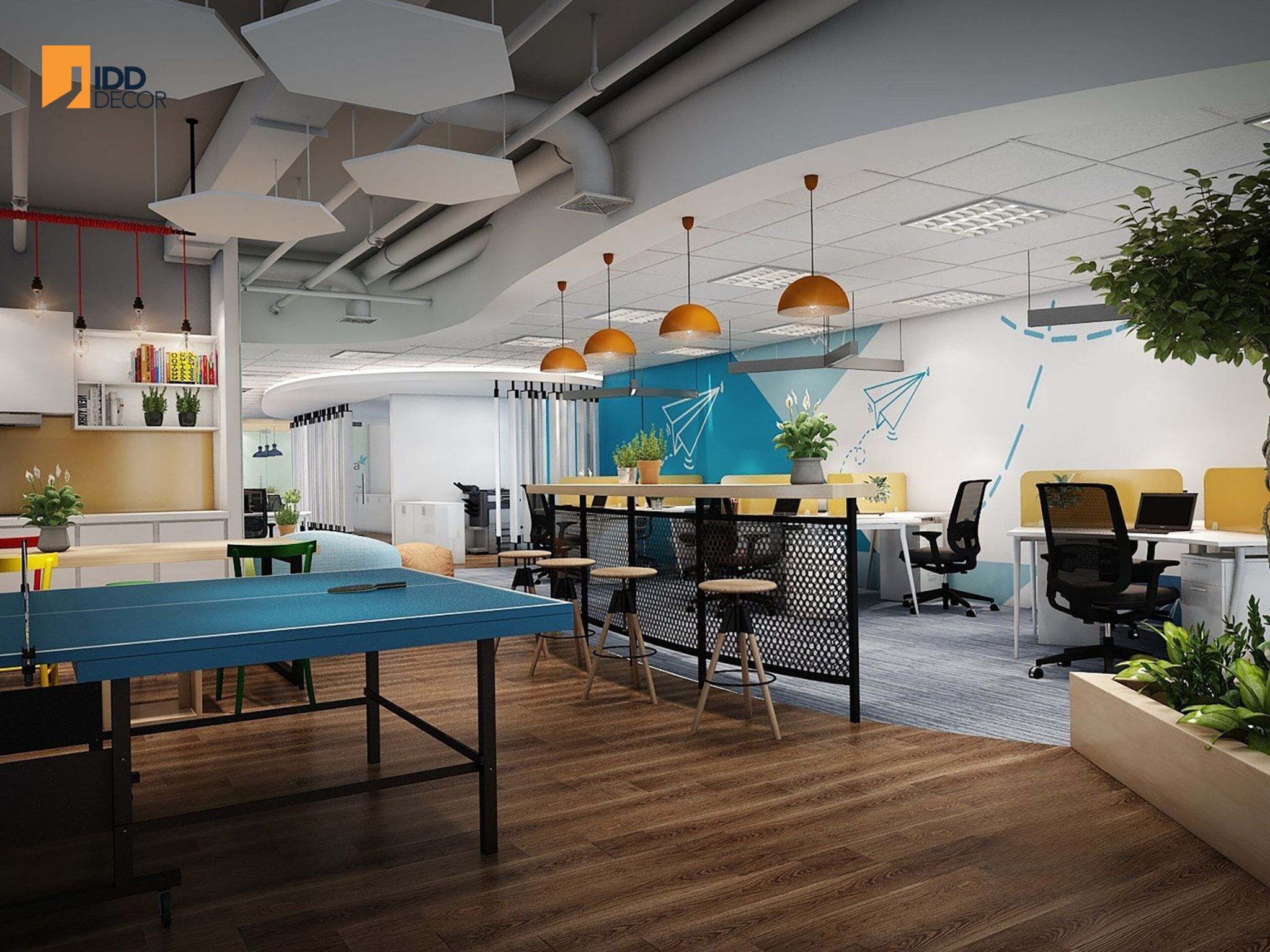
A well-planned pantry must support multiple groups at different times. Mixed seating—high tables, long tables, single chairs, sofas, and relaxation corners—allows employees to choose their preferred way to rest.
Each shift has distinct needs:
Morning shift: needs strong energy, bright light, quick breakfast options, and coffee.
Evening/night shift: needs a calming space to release stress and find warmth after late-hour work.
Companies must also consider:
Food storage systems
Simple heating/cooking equipment
Shared utensils storage
Waste-sorting bins
24-hour hygiene and maintenance plans
A well-designed pantry also includes efficient traffic flow to prevent congestion during shift changes or break peaks.
Different times of day affect employee mood differently. Interior design should adapt:
Warm tones: comfort for night-shift employees
Bright tones: energetic and motivating for morning shift
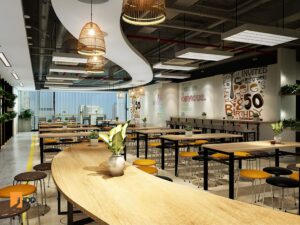
Natural materials (light wood, rattan, greenery, soft surfaces) help counteract the “industrial” feel common in high-intensity workplaces, supporting stress reduction and promoting relaxation.

|
Greenery – The Crucial “Energy Catalyst” in Multi-Shift PantriesIn high-intensity or technical environments, greenery is more than decoration—it becomes a passive energy-restoration solution. Greenery helps:
When used in pantry design, plants soften the environment, ease tension, and contribute to a balanced mental ecosystem—especially important in 24/7 workplaces. Examples: Greenery also improves microclimate, reduces heat radiation from equipment, and minimizes odors from food preparation—critical benefits for continuous operations. It also reflects sustainable corporate values, reinforcing care for employee well-being. IDD Decor integrates greenery strategically—on long tables, transition zones, wall shelves, and hanging structures—to enhance freshness without obstructing movement. |
|
|
|
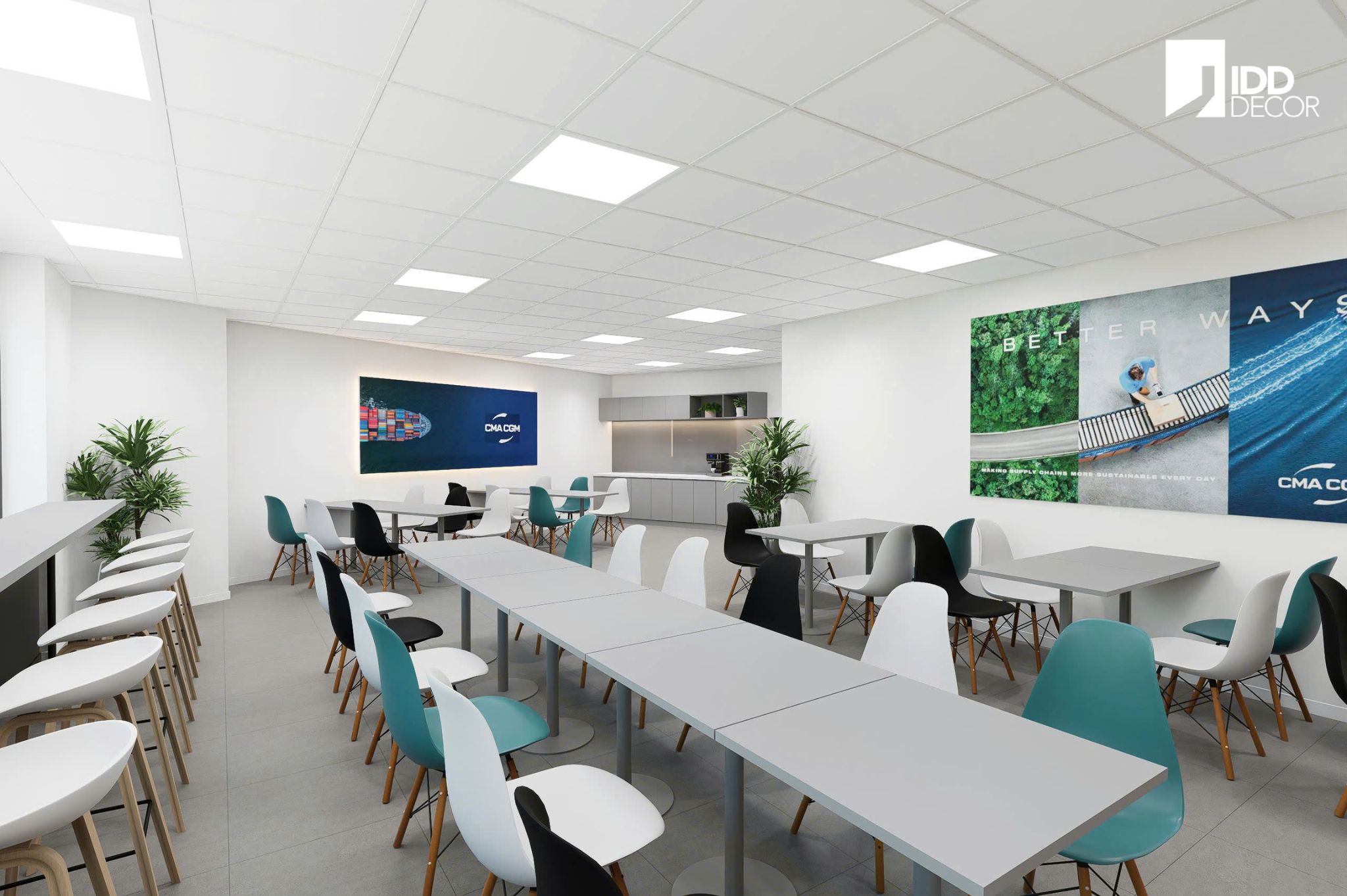
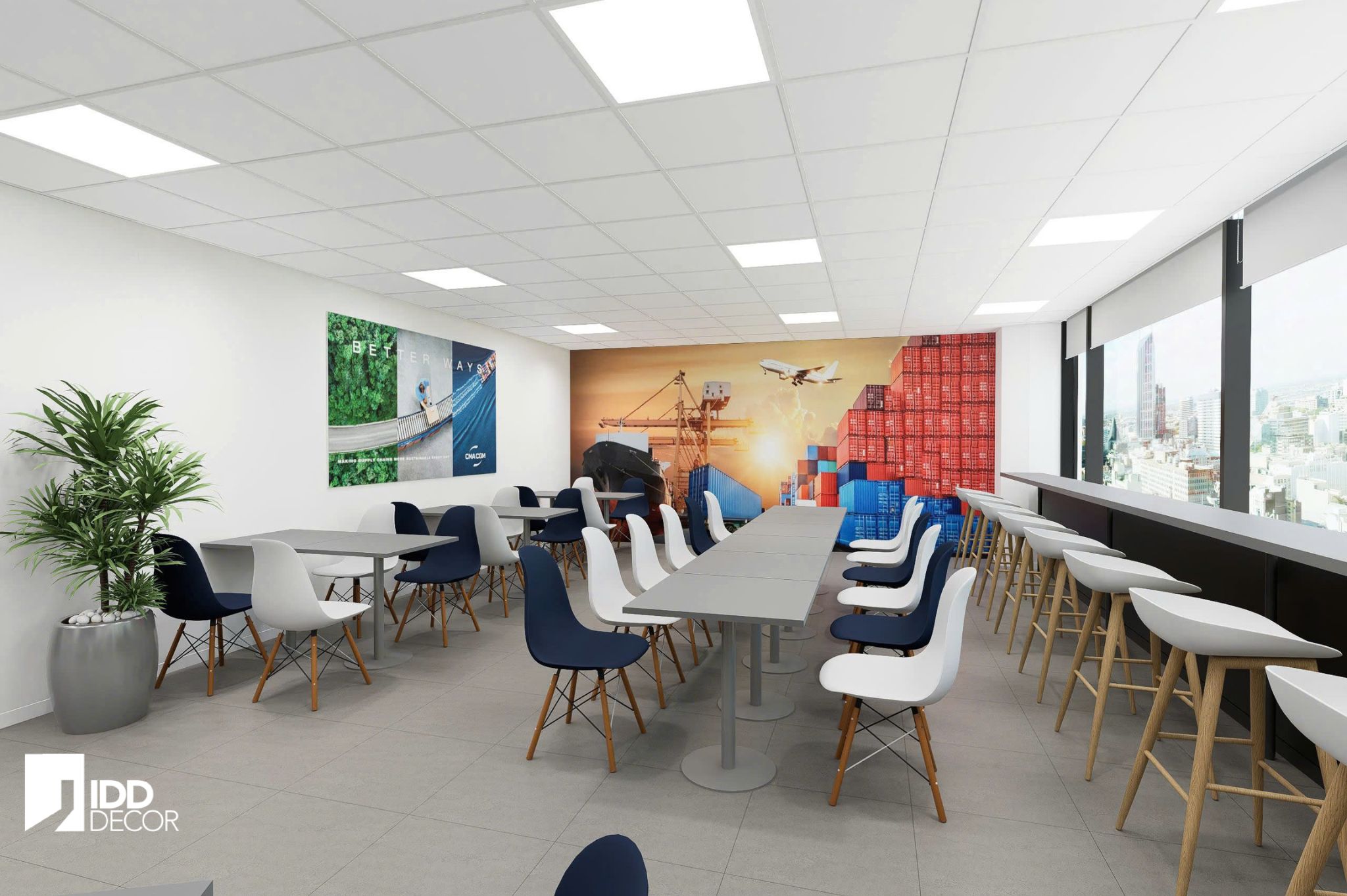
Integrating Brand Identity into Pantry DesignThe pantry is one of the most effective spaces to express corporate identity. Branding can appear through:
Examples:
|
|
With extensive project experience in manufacturing, logistics, FMCG, technology, and construction sectors, IDD Decor develops pantry models tailored to 24/7 operations.
The design process begins with an in-depth study of:
Employee count and usage patterns
Traffic and hourly demand
Nutritional needs
Corporate culture
Utility priorities
Branding requirements
From there, IDD Decor creates functional layouts, durable material selections, and optimized operational solutions. Beyond aesthetics, IDD Decor prioritizes real employee experience—ensuring the pantry becomes a true recharge space, not just a snack area.
In multi-shift operations, a well-designed pantry can significantly impact employee morale and workplace performance. More than a place for snacks or drinks, it supports mental balance, reinforces culture, and elevates the experience of employees in high-pressure environments.
Investing in pantry design is ultimately an investment in people, productivity, and the future of the organization. With strong expertise and extensive project knowledge, IDD Decor confidently delivers pantry solutions tailored to multi-shift enterprises, helping them build modern, human-centric, and sustainably efficient workplaces.
IDD Decor – Office Interior Design – Behind every door is a pathway to success
Address: Doxaco Building, 307B Nguyen Van Troi, Tan Son Hoa Ward (formerly Ward 1, Tan Binh District), Ho Chi Minh City
Hotline: 0896 640 986
Website: idddecor.com
LinkedIn: https://www.linkedin.com/company/idddecorvn/