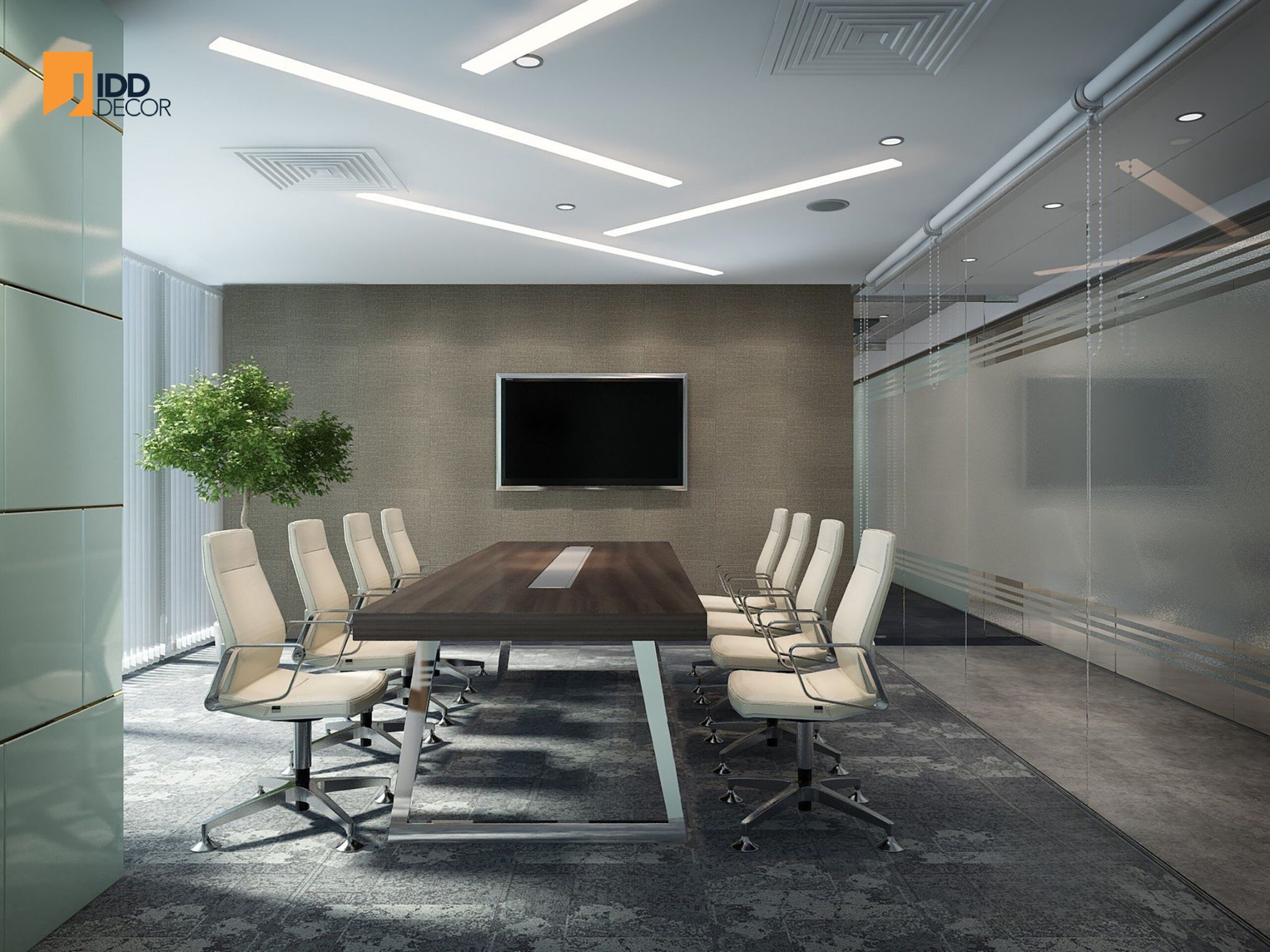


In today’s high-pressure corporate environment, meeting rooms are often the setting for intense discussions and critical strategic decisions. However, few organizations recognize that overly decorative, visually cluttered meeting spaces can trigger visual conflict, leading to mental fatigue, heightened stress, and reduced concentration. The rise of Minimalist Meeting Room Design offers an effective solution—clearing the visual field, minimizing distractions, and directing full attention toward the core content of each meeting.
Minimalist Reception Areas and Emotional Orientation from the First Touchpoint
Visual conflict (visual clutter) occurs when excessive and unnecessary visual information simultaneously impacts the retina, forcing the brain into constant processing.
Entering a meeting room filled with outdated charts, tangled cables, overly bright wall colors, or irrelevant decorative elements often pushes the brain into a state of cognitive overload. As a result, participants become fatigued more quickly, more irritable, and less capable of reaching consensus.
Conventional meeting rooms are frequently overcrowded with bulky furniture and fragmented technology systems. Exposure to excessive “visual noise” makes it difficult to maintain deep focus on presentations or meaningful dialogue.
Minimalism does not mean emptiness or lack of investment. It is the art of refinement—“Less is More.”
In meeting rooms, this philosophy translates into removing everything that does not directly support communication. A smooth table surface, streamlined seating, and uncluttered walls create the calm environment essential for strategic thinking.
Minimalist design favors basic geometric forms—rectangles, circles, flat planes—and neutral color palettes. This visual consistency gives the eyes a place to rest, reducing strain on the central nervous system.
Minimalist design directly influences how users perceive space through both technical and aesthetic strategies.
 |
Neutral color palette optimizationColors such as white, light gray, beige, or slate blue are commonly used. These tones reflect light effectively without glare, creating an ideal backdrop for presentation content. When colors stop competing for attention, participants naturally focus on discussion outcomes. Example: The minimalist meeting room at URC Vietnam’s Ho Chi Minh City office, featuring a white base palette subtly integrated with URC’s red brand color. |
One of the largest contributors to visual conflict is exposed wiring and scattered equipment. Modern minimalist meeting rooms incorporate:
In-table power boxes to hide cables beneath wood or stone surfaces
Wireless systems to reduce physical objects on the table
Wall-integrated displays for seamless visual continuity
Minimalist meeting chairs typically feature slim profiles, translucent materials, or tones that blend with wall colors. This prevents the space from feeling crowded or visually oppressive.
In minimalist design, what is unseen is just as important as what is visible.
Maximizing natural lightNatural light is a proven stress reliever. Minimalist meeting rooms often replace solid walls with large glass partitions, allowing views to the outside. This supports eye relaxation (the 20-20-20 rule), reduces screen fatigue, and minimizes visual conflict during long meetings. Example: CMA CGM’s minimalist meeting room design that fully leverages natural daylight. |
 |
Empty space is not wasted space. Clear areas around the meeting table and blank wall surfaces create a sense of formality and calm. Psychologically, these voids give participants room to “breathe,” allowing ideas to emerge more naturally.
Investing in minimalist meeting room design is not merely a stylistic decision—it is a business performance strategy.
With fewer distractions, discussions move straight to the point. Meetings become more concise and productive, reducing wasted organizational time.
Minimalist environments remove psychological barriers. In clean, refined spaces, the brain more easily connects fragmented data into innovative ideas. Many global technology companies adopt minimalist meeting rooms to encourage out-of-the-box thinking.
A refined minimalist meeting room communicates discipline, transparency, and modern thinking. It becomes a powerful emotional touchpoint during negotiations and contract signings.
At IDD Decor, each project is approached through user behavior analysis and spatial psychology.
Every company has different meeting frequencies and objectives. We analyze spatial dimensions to establish the optimal balance between furniture and open space.
We prioritize materials with moderate texture, low glare, and strong acoustic performance. Light natural wood, neutral felt carpets, and frosted glass are preferred choices.
Adaptive lighting systems are designed to adjust to different meeting contexts—face-to-face meetings, virtual calls, or presentations—ensuring consistent visual comfort.
Light oak wood combined with greenery creates a calming, nature-inspired environment ideal for creative brainstorming.
Using only black–white or light–dark gray contrasts, this style promotes intense focus and is often chosen for executive boardrooms.
Fully frameless glass partitions blur the boundary between inside and outside, delivering a strong sense of transparency and modernity.
Design is only half the story—maintenance completes it. Companies should establish meeting room usage culture:
Clear desk policy: Require all materials to be cleared after meetings
Document digitization: Encourage screens and tablets instead of excessive printing
Regular maintenance: Ensure concealed systems remain fully hidden and functional
With many years of experience in office interior design, IDD Decor delivers spaces that are both visually refined and operationally sustainable.
Expert design team: Deep understanding of minimalist principles and Grade A office standards
In-house manufacturing: Precision-crafted meeting tables and cabinetry tailored to each space
End-to-end service: From consulting and design to construction and warranty support
Visual conflict is a common yet often overlooked issue in office environments. Investing in a minimalist meeting room is an investment in mental wellbeing and organizational productivity. By eliminating unnecessary details, companies create space for focus, clarity, and successful decision-making.
Let IDD Decor accompany you in creating refined meeting environments—spaces where every touchpoint delivers calm and creative inspiration. If you are considering minimalist meeting room solutions, contact IDD Decor today for a complimentary consultation and in-depth site assessment.
IDD Decor – Office Interior Design – Behind the door awaits the journey to success
Address: Doxaco Building, 307B Nguyen Van Troi Street, Tan Son Hoa Ward (formerly Ward 1, Tan Binh District), Ho Chi Minh City
Hotline: 0896 640 986
Website: idddecor.com
LinkedIn: https://www.linkedin.com/company/idddecorvn/