

In today’s fast-paced modern workplace, where innovation and collaboration determine organizational success, the open discussion area has emerged as an essential design solution. Far beyond a mere physical space, it represents a shift from rigid traditional offices to flexible, interaction-driven environments that fuel creativity and connection.
According to reputable studies, open-plan office designs—including discussion zones—can increase employee productivity by 20–30% by promoting idea exchange among team members.
This in-depth article explores the open discussion area from its core definition to practical benefits, cultural value, and critical implementation notes. We’ll uncover how this space becomes the “nucleus” connecting people and ideas within a company.
An open discussion area (also known as an open discussion zone or collaboration hub) is a semi-formal space designed within an office to encourage natural, spontaneous conversations without the constraints of traditional meeting protocols. Unlike enclosed meeting rooms with fixed tables and formal atmospheres, these zones are typically located in central areas—near main workstations or traffic corridors—to ensure easy access for all employees. The design emphasizes openness, avoiding solid partitions and instead using flexible elements like sofas, round tables, or even standing discussion pods.
Open-plan offices maximize natural light and movable furniture to create a relaxed vibe—making employees feel like they’re in a creative café rather than a rigid corporate setting. In 2025 modern office designs, these areas often integrate technology such as interactive screens, digital whiteboards, and sound systems to support efficient brainstorming. For example, in high-tech offices, VR headsets may be available to discuss virtual concepts, expanding the boundaries of physical space.
The concept originated in the 1960s in the U.S., when companies like IBM piloted open offices to boost collaboration. By the 2000s, tech giants like Google and Facebook made it a global standard. In Vietnam, since 2010, major corporations such as Vingroup and FPT have adopted this model, turning it into a benchmark for modern workplaces. According to a CBRE report, by 2025, over 70% of offices in Ho Chi Minh City and Hanoi will include open discussion areas to support post-COVID hybrid work.
An open discussion area is far more than a casual chat spot—it delivers tangible operational advantages that enhance business performance. Here are the standout benefits:
In today’s rapid work environment, time is money. Instead of booking a closed meeting room, employees can gather instantly in the open zone to exchange ideas and resolve issues on the spot. Research by Morgan Lovell shows that quick discussions in open spaces can reduce task processing time by up to 40%, as information flows without delays. For instance, a marketing team can brainstorm a campaign in just 15 minutes instead of losing an hour preparing a formal room.
The open layout encourages voluntary participation, allowing diverse opinions to surface without hierarchical barriers. Modern offices equip these zones with fast-charging outlets and robust Wi-Fi, ensuring discussions translate into real action immediately.
One of the greatest strengths of open discussion areas is adaptability. With mobile furniture—wheeled stools, connectable round tables, or modular sofas—the space can transform for multiple uses: small team huddles, creative brainstorming, one-on-one mentoring, or light relaxation. According to the market research of IDD Decor, this model saves up to 30% of office floor space compared to traditional designs that require multiple dedicated meeting rooms.
In 2025, integrating green elements like plants and living walls is trending, making the space not only flexible but also eco-friendly. For example, a discussion zone can be reconfigured in minutes into a workshop area, delivering maximum convenience for businesses.
Strategically placed at department intersections, open discussion areas facilitate serendipitous encounters, building a resilient internal network. Saltcreek Office Furniture notes that this design strengthens cross-functional ties and reduces information silos. A marketer can casually consult an IT specialist on the spot, sparking unexpected innovations.
With remote work on the rise, these zones act as physical bridges for hybrid employees visiting the office. Features like shared screens and 360° cameras integrate online participants seamlessly, maintaining uninterrupted collaboration.
Beyond functionality, open discussion areas deliver profound cultural impact, fostering an open and inclusive work environment.
When conversations flow naturally in open settings, knowledge isn’t confined to silos. This lays the foundation for a culture of lifelong learning. AskCody reports a 25% increase in internal knowledge sharing in offices with discussion zones, as casual talks often yield valuable insights.
For example, a new hire can absorb veteran expertise in a brief chat, shortening onboarding time. Long-term, this drives innovation, transforming the company into a learning organization.
Traditional offices often suffer from hierarchical and departmental walls. Open discussion areas dismantle these by creating equal-opportunity spaces where staff can approach managers or executives comfortably. Miraifurnico highlights its fit for multi-generational teams, where Gen Z and Millennials prioritize openness.
The result? Stronger internal relationships and 15% lower turnover, as employees feel heard and valued.
Connection goes beyond technology—it’s human. Open zones nurture belonging, deepening employee commitment. Such creative spaces can lift team performance by 35% through organic collaboration.
Post-pandemic, with mental health in focus, these areas double as relaxation spots, reducing stress and elevating overall organizational effectiveness. Light team-building activities here strengthen unity, turning the office into a “second home.”
2026 will mark an explosion of sustainable and tech-driven trends. Open office designs will incorporate AI to auto-adjust lighting and temperature for optimal comfort. Eco-friendly materials like recycled wood and abundant greenery will become standard, lowering the company’s carbon footprint.
A standout trend is biophilic design—connecting people with nature via plants and water features, boosting focus by 15%. Companies like Publicis lead with modern communication-inspired layouts, featuring large LED screens for real-time idea display.
To maximize impact, pay attention to:
Always survey employees pre-design to match real needs.

|
Đại Việt Group – Youthful, Flexible, InspirationalĐại Việt Group’s open discussion zone features vibrant colors, greenery, and modular furniture. Beyond meetings, it hosts idea-sharing sessions, sparking team creativity. The other space runs along large windows, maximizing natural light and openness—fueling ambition to take Vietnamese media global. |
|
|
|
||
Publicis – Modern Communication SpiritPublicis uses large screens and comfy seating to reflect dynamic media energy. The other open discussion zone, adjacent to the main meeting room, supports group activities, brainstorming, and quick huddles—ideal for open communication and non-stop creativity in advertising. |
|

|
|
|
|
|

|
Constellation – Where Stars DiscussConstellation crafts a “galaxy of ideas” with LED starlight ceilings and round tables promoting equal dialogue—a prime example of a creative office. |
|
|
|
||
Leo BurnettLeo Burnett positioned at the junction of circulation corridors, staff workspaces, and branding areas, it becomes an idea pit-stop—perfect for quick talks or jotting sudden inspirations. |
|

|
|
|
|
|
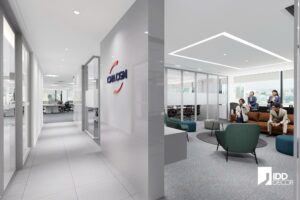 |
CMA CGMUnlike traditional rooms, CMA’s discussion zone offers free-form layout with relaxation sofas, modern floor seating, and multi-use round tables—encouraging fast, natural exchanges vital in high-speed logistics. |
|
|
|
||
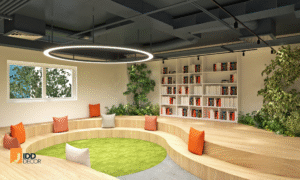
ECOBAECOBA’s intelligently arranged spacious zone blends high tables, soft round sofas, and versatile wooden platforms—facilitating idea exchange, quick discussions, short training, and internal events, markedly improving team efficiency. |
|

|
|
|
|
|
 |
IDP Hai Bà TrưngFor global education leader IDP, the open discussion zone is key to a dynamic culture, promoting interaction among staff, consultants, and students. It naturally spreads international education ideas, stimulating creative thinking and collective spirit—enhancing global-standard study abroad and English training services. |
To clearly illustrate real value, here are five major benefits backed by quantitative data and Vietnamese case studies.
Open zones cut internal task time by 38%—as seen at Axon Active Vietnam (Da Nang). Central, flexible design eliminates booking delays; quick meetings rise 2.5x/week/person, lifting DevOps performance 22% in six months. This proves modern office design turns “wait time” into action.
The space becomes a natural idea incubator. Shopee Vietnam’s three themed zones—“Flash Sale Zone” (high tables for 10-min huddles) and “Creative Lounge” (cozy sofas for deep brainstorming)—drove 180% more ideas submitted internally. Notably, 7 of 12 new app features originated from casual chats here. Creative workspaces need only free, multi-directional interaction.
It acts as a natural stress reliever. At VNG Corporation, employees using the zone (with massage chairs, coffee machines, soft lighting) for short breaks saw 29% fewer burnout-related leave requests. Direct interaction boosts oxytocin, countering Zoom fatigue and enhancing workplace well-being.
Often overlooked yet critical for SMEs: Tiki Corporation saved VND 320 million/year in rent by optimizing modular furniture (wheeled seats, foldable tables, movable partitions) instead of building two extra meeting rooms. Usage rate hits 75–80% vs. traditional rooms’ 35%—proving flexible design is both aesthetic and economical.
The ultimate connection tool. VPBank’s weekly “CEO Coffee Chat” in the open zone raised employee happiness (eNPS) from 42 to 68. No hierarchy, no appointments—leaders and staff share a sofa like peers. For multi-generational teams, soft zoning bridges Gen Z’s tech love and Gen X’s privacy needs.
Thus, the open discussion area is a living ecosystem where productivity, creativity, health, cost, and culture converge—delivering sustainable competitive edge to savvy businesses.
Yes, but tailor to scale and industry. Small firms can use multi-purpose zones; large ones need clear sub-zones.
Costs vary by project size, materials, and scope. Contact IDD Decor for a detailed quote on design and construction.
Use acoustic panels, thick carpets, and plants to absorb sound.
An open discussion area is more than a design choice—it’s a declaration of connected, open, and agile work culture. When executed well, it becomes a creative transit hub where ideas take root and people connect to grow together. In 2025, with advancing technology and sustainability awareness, investing here yields significant competitive advantage. Start transforming your office into a truly connected environment today!
IDD Decor – Office Interior Design – Behind every door lies the path to success